The Consent Deficit: Britain’s Housing Consensus and the Vanishing Right to Object

Photo: Eric Jones, CC BY-SA 2.0, via Wikimedia Commons
There is a particular silence that descends on a room when everyone agrees. It is not the silence of resolution but of a conversation that has stopped asking awkward questions. British housing policy has lived inside that silence for the better part of a decade, and the strange thing is that it is routinely mistaken for progress.
The liturgy of ‘more homes’
On the surface the housing debate looks healthy. Rival parties trade blows, select committees publish, think tanks compete for headlines, and the voluntary sector keeps the moral pressure up. Look more closely and the disagreement is largely about means. On ends there is near-perfect communion. Volume housebuilders, homelessness charities, the professional bodies, the devolved administrations and both front benches converge on the same incantation: Britain must build more homes.
The annual figure has acquired the status of a creed rather than a target, and to interrogate it aloud is to be heard as questioning whether people deserve shelter at all — a category error that ends most arguments before they have begun. This is the first assumption worth unhiving. Agreement between the housebuilding lobby and the housing charities is not evidence that a difficult question has been settled. It is evidence that the question has been redefined until agreement becomes possible.
Targets as totems
The number is dutifully repeated, revised, restated and quietly missed. What is rarely examined is the gap between the totem and the thing it stands for. Permissions are not completions; completions are not dwellings occupied at the price people can pay; and a dwelling occupied is not the same as a home that a household can afford to stay in. Each link in that chain is a political choice, and each one dissolves into vagueness the moment the consensus is invoked.
A target can also function as a substitute for thought. Once the number is fixed, the rest of the policy conversation becomes a technical exercise in removing friction — planning departments, environmental assessments, consultation periods, nutrient neutrality, all the tedious impedimenta of a legal system that happens to belong to somebody. That framing is efficient. It is also a way of never asking what is being consented to.
The ownership question nobody wants to open
Britain’s housing crisis is not simply a shortage of units. It is a settlement about who owns, who rents, who holds the land and who captures the uplift when permission is granted. The consensus treats these as second-order matters, and yet they determine almost everything about what a new street feels like twenty years after the scaffolding comes down.
Consider the long retreat of the small and medium housebuilder, a process visible since the 1980s and rarely reversed by any intervention. Consider the drift of new supply towards build-to-rent, and the institutional capital now embedded in British residential property. Consider the meaning of ‘affordable’, a word that in much of the country describes a rent that a nurse cannot pay. None of these are secrets. They are simply inconvenient to a consensus that has agreed in advance that supply is the only variable.
Density, design and the aesthetics of avoidance
The same avoidance operates on the physical question. Almost nobody campaigning for more homes campaigns for what those homes should look like. The terraced street — the form that actually produced much of urban Britain and that developers rarely build because the economics are unhelpful — sits awkwardly beside the volume estate with its cul-de-sacs and its bin stores. A serious debate about density is a debate about beauty, daylight, street life, parking, noise and the terms on which strangers live next to one another.
Instead we get a proxy war between people who say the character of a neighbourhood must be preserved and people who say that any objection is nimbyism. Both are avoiding the design argument, because the design argument requires specifying a preferred outcome rather than defending a posture.
Who holds the veto
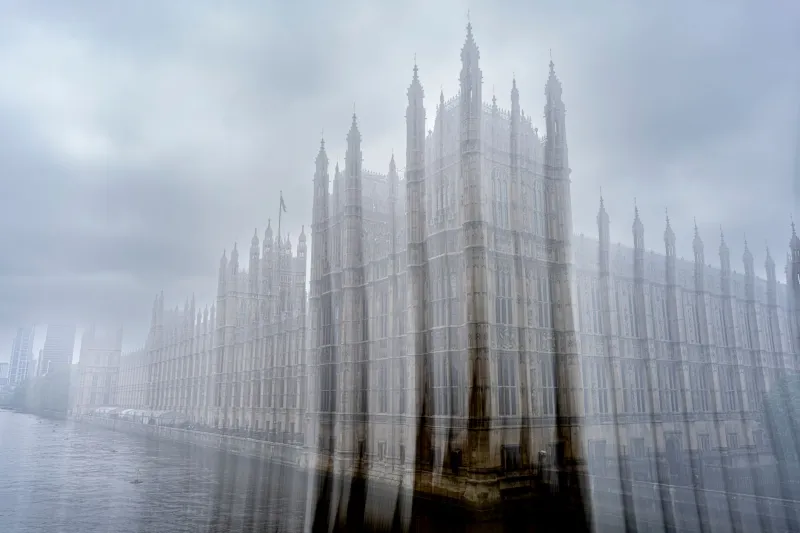
Strip away the rhetoric and the planning system is a machine for allocating vetoes. A parish council here, a planning committee there, a neighbourhood plan, a mayoral strategy, a call-in by the relevant Secretary of State. Every reform since the war has moved that veto around the board, and the present consensus continues the tradition: it shifts discretion upwards, from the street to the target, and calls the result modernisation.
This is the constitutional question hiding in plain sight. If the national interest genuinely requires more homes in a given place, on what authority is local objection overridden? And if local objection is legitimate, what does the national target actually mean? A system that answers neither question leaves both sides convinced they have been cheated, which is precisely the condition of English planning today.
A framing that starts with consent
The alternative is not to defend obstruction. It is to insist that a yes extracted without consent is a yes that will not hold. Growth in a democracy has to be bought with something more durable than a revised paragraph in the National Planning Policy Framework: infrastructure delivered before the first occupant arrives, a meaningful local share of the land value uplift, design codes with actual teeth, and a right to object that is bounded but real rather than ritual.
That last point is the one Westminster finds hardest. A right to say no that has no effect is not a right; it is a complaint form. But a right to say no with no limits is a recipe for paralysis. The honest position is somewhere unglamorous in between, and it can only be reached by admitting that the argument is about consent rather than arithmetic.
Consensus as sedative
None of this is an argument for building less. Supply matters, and pretending otherwise would be its own kind of evasion. The claim is narrower and more uncomfortable: the cross-party agreement on housing has become a way of not having the arguments that would actually change outcomes. It soothes the electorate, flatters the think tanks and spares ministers from choosing between their own supporters.
A genuine housing policy would be contentious. It would name a tenure, defend a density, take a view on ownership and say plainly who may refuse and on what grounds. Until someone is willing to be disliked for doing that, the consensus will keep producing targets, press releases and not quite enough houses — and everyone will keep agreeing that the problem is a mystery.