The Cult of the Headroom: Britain's Fiscal Rules and the Closing of Democratic Argument
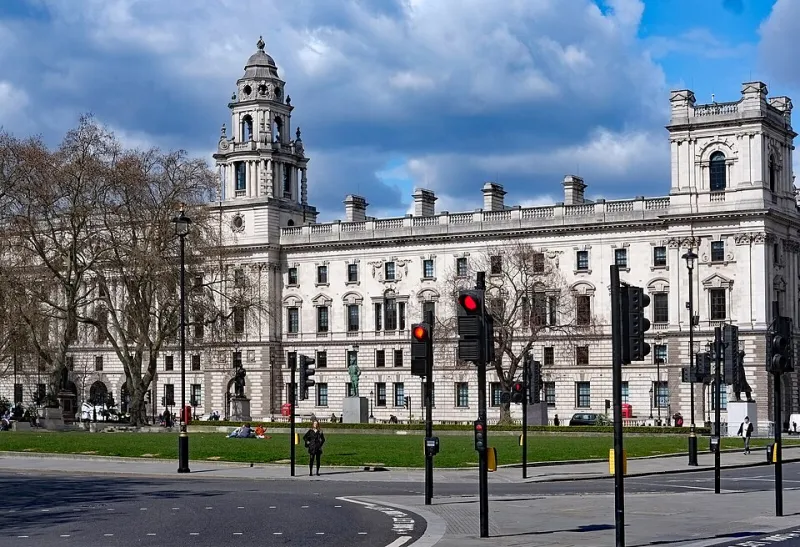
Photo: Jim Osley , CC BY-SA 2.0, via Wikimedia Commons
In Westminster, the most revealing word in any Budget is not a tax or a spending line. It is 'headroom'. The Chancellor rises, the forecasts are published, and the verdict is delivered before the details have been digested. Does the plan leave enough room against the rules? Has the government kept its credibility? The language is technical, but the effect is theological. Fiscal policy has acquired a priesthood, a liturgy and a set of unspoken commandments.
The High Priest and the Forecast
The Office for Budget Responsibility was created in 2010 to bring independence and transparency to the public finances. Its creation was a reasonable response to a real problem: governments had too often produced optimistic forecasts and then adjusted the story to fit. The OBR does not make policy. It scores it. But the scoreboard has become the game. A forecast is a model, not a revelation; it rests on assumptions about growth, productivity, interest rates and behaviour. Yet in the current consensus, the forecast is treated as a tablet of stone.
The high priest does not rule, but he defines the boundaries of the permissible. If the OBR projects that the fiscal rules will be met with a few billion pounds to spare, the Chancellor is deemed credible. If the margin is too thin, the Chancellor is deemed reckless. The substance of what the money is for recedes. The question is not whether a policy is wise, fair or effective, but whether it fits the forecast.
Headroom as Moral Language
Credibility is a virtue word. It belongs to the language of sobriety, responsibility and adult politics. Its opposite is not error but sin: profligacy, recklessness, the magic money tree. The 2022 mini-budget is invoked as a morality tale, and not without reason. The market reaction was severe, and the political consequences were swift. But the lesson taken was not simply that unfunded tax cuts are unwise. It was that markets must be appeased and rules must be tightened. That lesson has been learned across parties.
Headroom is now discussed like a weather forecast: a condition to which policy must adapt. But headroom is not a natural phenomenon. It is the product of rules that politicians have chosen. The choice of a five-year horizon rather than a four-year horizon, the definition of debt, the treatment of investment, the decision to exclude certain liabilities: these are political choices dressed as technical necessities. Once adopted, they become the grammar of Budgets. They exclude options before the argument begins.
The Rules That Cannot Be Argued With
Fiscal rules are not laws of nature. They are commitments about time, debt and credibility. A rule that says debt must fall as a share of GDP by a particular year is a rule about a particular year. Change the year and the arithmetic changes. Change the definition and the target moves. This is not to say that rules are useless. They can anchor expectations and prevent casual improvisation. But they are instruments, not idols.
The problem is that the rule has become a cage. It narrows the space in which democratic argument can occur. A government that wanted to borrow more for public investment would not merely have to win an argument about the merits of that investment. It would have to win an argument about the rule itself, against a consensus that treats any challenge to the rule as a challenge to civilisation. The result is a politics of managerial adjustment. Democracy is reduced to choosing between two sets of managers who promise to obey the same machine.
A Cage Built by Consensus
The cross-party consensus is the most effective enclosure of all. If both main parties accept the same fiscal framework, the general election cannot change it. Voters can change the government but not the grammar of government. The manifesto becomes a menu of small variations within a fixed budget. The big questions, such as the level of taxation, the scale of public investment and the role of the state, are pre-empted by the rules.
This is not to say that fiscal credibility is worthless. Borrowing costs matter, and credibility has real effects on households and businesses. But the question is who defines credibility and for what purpose. A household budget is not a state budget. A state can issue currency, set the terms of its own debt and invest in assets that yield returns over decades. To treat the public finances as a household purse is not prudence. It is a category error with political consequences.
What Would a Real Fiscal Argument Look Like?
A real fiscal argument would begin with ends, not headroom. What is public investment for? Which liabilities are acceptable? What does the bond market actually punish, and what does it merely dislike? It would admit trade-offs rather than hiding them behind forecasts. It would treat the OBR as an auditor, not an oracle. It would allow a government to say: we choose a different path, and here is the cost.
That is not a recipe for recklessness. It is a recipe for responsibility with a human face. The cult of headroom has made Britain fiscally cautious and politically timid. It has narrowed the space in which democracy can breathe. The Budget is a moral document disguised as a spreadsheet. It is time we argued about the morality, not just the margin.