The Paper Parliament: Why Britain Keeps Asking and Never Decides
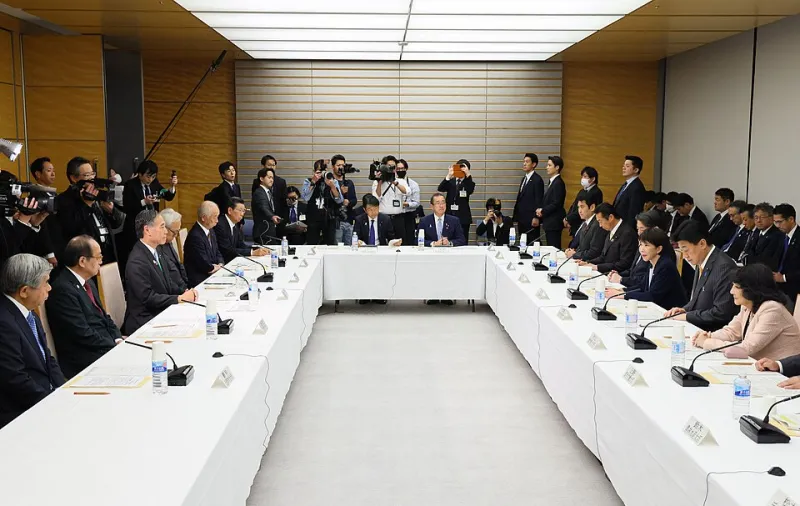
Photo: 内閣広報室|Cabinet Public Affairs Office, CC BY 4.0, via Wikimedia Commons
There is a particular sound in British public life that should worry anyone who cares about democracy. It is not the clatter of a division bell or the roar of a demonstration. It is the quiet, industrious hum of a consultation response being drafted by a public affairs consultant in a serviced office in Leeds.
Public consultations, stakeholder workshops and "engagement exercises" have become the default instrument of governance in the United Kingdom. The theory is attractive: government proposes, the public responds, ministers refine. The practice is rather different. What has emerged is a consultation industry — a professional class fluent in the language of impact and outcome measures — which has quietly displaced the messy, conflictual business of democratic disagreement.
The Geometry of a Loaded Question
Look closely at how a typical consultation is constructed. A department or local authority produces a document, a set of options (usually three, of which one is quietly preferred), and a questionnaire. The questions are framed to invite agreement rather than interrogation. "Do you support our proposal to improve X?" is not a question about whether the proposal is wise, affordable or desirable. It is a request for endorsement dressed as enquiry.
This is where the hive metaphor earns its keep. A hive is a structure of extraordinary internal coordination and very little internal dissent. Everyone is busy, everyone is productive, and the queen is not elected. Consultations now function in a similar way. They generate volume — thousands of responses, hundreds of workshop hours, a genuine pile of paperwork — and from that volume a minister stands up in the Commons and declares that the policy has been tested against public opinion.
The pre-filtering is the crucial part. Consultees are invited to comment on the design of a decision that has, in substance, already been taken. The scope of the consultation is usually determined by the very people whose proposal it is. This is not listening. It is the manufacture of a record.
Planning: Where the Form Does the Talking
Housing and planning offer the clearest example. The planning system is saturated with consultation: pre-application engagement, statutory publicity, statements of community involvement, examination hearings. Yet the strategic direction of development is set by national targets, local plans and viability assessments that treat community objection as a cost to be modelled rather than a view to be weighed.
Residents of a town in the home counties can spend months attending exhibitions, writing objections and completing forms. They can demonstrate, with some clarity, that the school places do not add up or that the road network will not cope. The response will be a document acknowledging that they raised these points. There is no obligation in the system to agree with them, or even to alter the proposal materially. The consultation has done its work the moment it has been completed.
What is lost when the form replaces the argument? The possibility of a genuine loser. In a real political contest, someone wins and someone loses, and everyone knows it, and the losing side can at least organise against the next round. In the consultation model, nobody loses, nobody wins, and the decision is presented as the natural output of a rational process.
The NHS and the Reconfiguration Ritual
Few areas produce as much consultation output as the National Health Service. Proposals to reorganise services — close a maternity unit, centralise a stroke service, shift an emergency department — are inevitably accompanied by a "period of engagement", often followed by a formal consultation, sometimes reopened, occasionally judicially reviewed.
Ministers and health executives deploy this ritual with real skill. The clinical case is presented as technical, which it partly is. That technical framing then does a great deal of political work, because it makes opposition appear parochial. The local campaigner arguing to keep a service is cast as emotional and self-interested against the rational clinical planner. The values at stake — travel times, the meaning of a local hospital, the definition of what counts as a good health service — are relocated into a decision framework where nobody is permitted to argue about them directly.
The Transport Workshop and Its Regulars
At the local level, the same pattern appears in transport. A council proposes a bus network change, a parking scheme, a new cycle lane or a change to school streets. It writes a consultation. It hires a facilitator. It holds a workshop in a community hall on a weekday evening in term time.
Who comes? The same people who always come. The retired, the organised, the professional advocates. They are not a fraud — they often represent genuine views — but they are a constituency with time to spare, and the process rewards time to spare. The professional responder, whether a paid campaigner or a self-taught expert on accessible transport, dominates. The parent on a zero-hours contract does not. And the department, once the exercise is complete, presents the responses as a representation of "the community".
Counting Noise Instead of Hearing Argument
The deepest problem is not that consultations are fake. It is that they are real enough to provide legitimacy while being engineered to avoid genuine choice. Ministers are rarely lying when they say a policy has been consulted on. They have consulted. And there is a legitimate case that consultation improves the design of policies — catching errors, discovering unintended consequences.
But democratic argument is not the same as policy refinement. Argument requires that the framework itself be contestable, that proposals can be rejected outright, that participants enter as equals rather than as respondents. Consultations rarely offer that. They offer a channel for feedback, and in doing so they channel dissent away from the place where it might actually matter.
The answer is not to abolish consultation. It is to stop pretending it is a substitute for politics. Where a genuine choice is on the table — a closure, a tax, a road, a development — it should be presented as a choice, with clear consequences, open contestation and a decision that carries the name of the person who made it. The hive will always prefer to collect noise. A democracy needs somewhere for the argument to happen.
The Alternative
A more honest system would begin by telling the public what is actually being decided, by whom, and on what basis disagreement will be resolved. It would narrow the scope of consultation to genuine technical refinement and open the strategic questions to contest — referenda where appropriate, yes, but also open decision-making, adversarial scrutiny and elected bodies prepared to choose and defend their choices.
That is a harder, noisier, less comfortable politics. It is also the only kind that deserves the name. The form will never replace the forum, whatever the dashboard says.