The Bollard and the Boundary: Britain's Traffic Filters and the New Enclosure
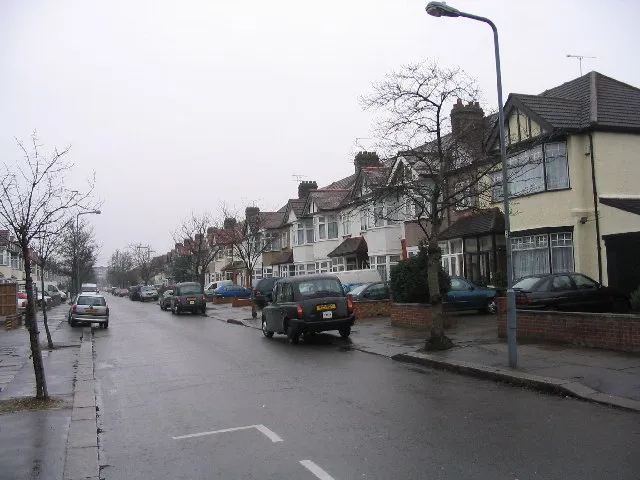
Photo: Andrew Dann, CC BY-SA 2.0, via Wikimedia Commons
On a wet morning in a British city, the most consequential piece of transport policy is often a planter. A bollard, a camera, a row of timber boxes: these are the instruments of the modal filter, the technical name for the barriers that stop cars passing through a residential street while allowing pedestrians and cyclists to continue. They are presented as humble, local, almost apologetic interventions. In practice they redraw the map of who can move freely and who must take the long way round.
The case for low-traffic neighbourhoods, school streets and filtered roads is not frivolous. Residential streets were not designed for through traffic, and the rat-running that blights many urban areas is a genuine nuisance. Quieter roads can mean safer school journeys and cleaner air at the school gate. But a promise is not an accounting. The active travel consensus treats the car as a moral failing and the filter as a neutral instrument of virtue. Neither proposition survives contact with the social ledger.
A Neutral Measure With a Social Ledger
No traffic scheme is socially neutral. Every filter creates two classes of resident: those inside the boundary and those outside it. Those inside gain quiet, safety and sometimes property value. Those outside absorb the displaced traffic, the longer journeys and the extra time. The redistribution is not random. It follows house prices, tenure, car ownership, disability and shift patterns. It follows the geography of who can afford to live within walking distance of everything and who cannot.
A household in a leafy, well-connected neighbourhood may find it easy to trade a car journey for a cycle ride. A household on an outer estate, in private rented accommodation or on a low income may not. The parent who works a late shift, the carer who visits an elderly relative across town, the tradesperson who carries tools and materials: these are not abstractions. They are the people who pay the detour tax. The scheme may be local, but its costs are not evenly localised.
The Consultation Theatre
Consultation has become the liturgy of the traffic filter. Councils publish plans, open online portals, hold drop-in sessions and invite comments on experimental traffic orders. The forms are completed, the objections logged and the scheme adjusted at the margins. Yet the central question is often excluded from the ballot paper. Residents are invited to comment on the placement of a planter, not on whether the boundary should exist at all.
This is consultation as theatre: a performance of listening that leaves the distribution of costs untouched. The questions are technical because technical questions are safer. Design, signage and exemption criteria can be debated without disturbing the consensus. The principle cannot. To ask whether a scheme is fair is to ask who gains and who loses, and that is precisely the question the active travel framework is designed to avoid. The council can then point to engagement figures and say the community has been heard. It has been heard, but it has not been empowered.
Who Carries the Detour
The detour is a tax paid in time, fuel and inconvenience. It falls hardest on those with the least capacity to absorb it. Carers, cleaners, delivery drivers, tradespeople and shift workers do not move through the city in the same way as the professional cyclist or the home-working consultant. A nurse finishing a twelve-hour shift does not need a lecture on active travel. She needs a road that takes her home.
School streets raise the same problem in miniature. The child who lives on the boundary of a restricted zone may gain cleaner air at the gate, while the parent who must drive from a neighbouring ward absorbs the exclusion. Disabled residents often find themselves in an especially cruel position: the language of accessibility is invoked to justify schemes that make some journeys longer and more difficult. These are not arguments against safety. They are arguments against pretending that safety has no distributional cost.
The Enclosure Beneath the Language
Enclosure is an old word in British politics. It describes the fencing of common land and the conversion of shared resources into private advantage. The new enclosure is less literal. It fences movement, not land. It does not privatise the street; it socialises a particular kind of access while dispersing the costs to those outside the gate.
The language of climate and safety shields the distributional question from scrutiny. To object is to be cast as opposed to children's lungs or the planet itself. That is not argument; it is moral hostage-taking. A democratic debate about traffic must be able to say both that cleaner air matters and that a scheme which punishes the car-dependent poor is not automatically progressive. The bollard is small, but the boundary it draws is not.
A Localism Worth the Name
None of this means filters are always wrong. Some streets are unsuitable for through traffic, and some schemes may be well designed and widely supported. The question is how decisions are made and who bears the burden. Localism should mean more than consulting residents on the colour of planters. It should mean giving them the evidence, the alternatives, the costs and the power to say no.
Without that, traffic filters become another example of a consensus that knows best. The active travel agenda has much to recommend it, but it cannot claim neutrality while redistributing access along class lines. The new enclosure is polite, well-signposted and dressed in the language of public health. It is still an enclosure.