Small Rooms, Sharp Words: In Defence of the Parish Council
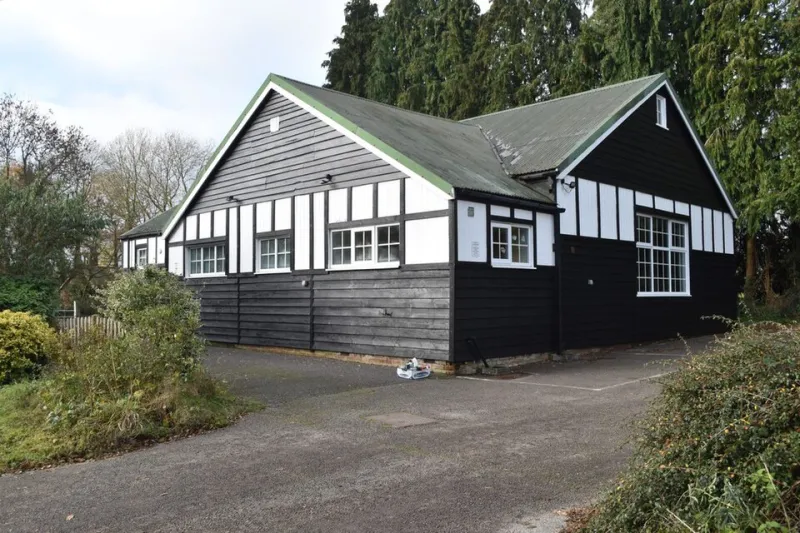
Photo: David Martin , CC BY-SA 2.0, via Wikimedia Commons
There is a village hall somewhere tonight where eleven people will argue about a bench. Two of them will have read the relevant guidance more carefully than most MPs have read a select committee report. One will be convinced the bench is a waste of precept money; another will have measured the sightlines for a wheelchair user and be quietly furious. The argument will be recorded, minuted, and settled by a vote.
It will not trend. It will not be described as a national conversation. It is, nonetheless, politics in the only sense that has ever reliably worked: people with conflicting interests, sharing a place, obliged to reach a decision and then to live beside each other afterwards.
The cult of scale
The prevailing wisdom of the past two decades runs the other way. British governance has been consolidating at speed. District councils have merged into unitary authorities; counties have been folded into combined authorities; and the map of England is now regularly redrawn in the name of strategic capacity. The devolution white paper published last year continued the pattern, coupling the promise of new powers with the condition that local government reorganise itself into larger units first.
This is presented as empowerment. It is often something closer to delegation: powers passed downwards on the condition that the recipient becomes bigger, more corporate, and more legible to Whitehall. A mayor with a strategic mandate over transport and skills is a real thing, and not to be sniffed at. But a mayor covering two million people operates at a distance at which the bench, the bus stop, the pothole and the disputed footpath cease to be political questions and become service tickets.
What is lost in that translation is the experience of being outvoted by someone you will see in the shop on Saturday. That experience is disagreeable. It is also irreplaceable.
Community power as bypass
The fashionable vocabulary of 2026 leans heavily on the word community. Community power, community assets, community-led housing, community engagement strategies. Much of it is sincere. Some of it is a mechanism for routing decisions past elected institutions that are considered awkward — the parish that refuses to endorse a development, the town council that keeps asking unwelcome questions about a land deal.
Citizen assemblies, participatory budgeting exercises, and online consultation platforms are not substitutes for local government. They are complements, at best, and their selection processes are rarely as neutral as their branding suggests. A residents’ panel convened by a developer is not a parish meeting. A survey with a 4 per cent response rate is not a mandate. The difference is accountability: a councillor can be removed, a forum convener cannot.
The parish and town tier, meanwhile, remains the part of the constitution with the deepest roots and the thinnest respect. There are around ten thousand such councils in England, with a precept income and a set of powers that range from the real to the barely enforceable. They have been the subject of consultation on strengthening their role more times than most of their clerks care to remember. They are routinely described as the first tier of local government, and routinely treated as the last to be listened to.
The awkwardness is the point
Critics of parochial politics make a fair practical case: volunteer capacity is thin, clerks are scarce, standards and audit regimes are onerous, and some councils have behaved atrociously. All true. Reform is needed, particularly around conduct and transparency.
But the criticism often conceals something else — a metropolitan impatience with small-scale disagreement, a sense that serious matters should be handled by serious people on serious scales. That impatience is precisely what has produced a national politics in which decisions are announced rather than argued, and in which consultation is a stage in a communications plan.
The parish meeting is the opposite of that. It is inefficient. It is often ill-attended. It is occasionally captured by a single-issue faction. It also forces a kind of political education that no civics curriculum can supply: how to make a case, how to lose one, how to accept a vote you consider dim-witted, and how to come back next month and try again.
What devolution ought to mean
A serious localism would not begin with new mayoral boundaries. It would begin by asking which powers are currently exercised at a level where no one can name the person responsible. It would hand down not only budgets but genuine discretion, including the freedom to make mistakes that look foolish in the county press.
It would also resist the tidiness that Whitehall finds so congenial. Larger units are easier to audit; they are not necessarily better at governing. And it would stop treating community engagement as a substitute for community government.
There is a temptation, in a site devoted to unpicking received wisdom, to offer a grand redesign. The honest answer here is smaller and less satisfying: more parish arguments, not fewer. More contested meetings, more contested minutes, more contested precepts. A politics where disagreement is not a failure of civility but the ordinary weather of a shared place.
The bench will be decided either way. Better that it is decided in the room, by people who have to walk past it tomorrow.