The Borrowed Seal: Britain’s Arm’s-Length State and the Government Nobody Owns
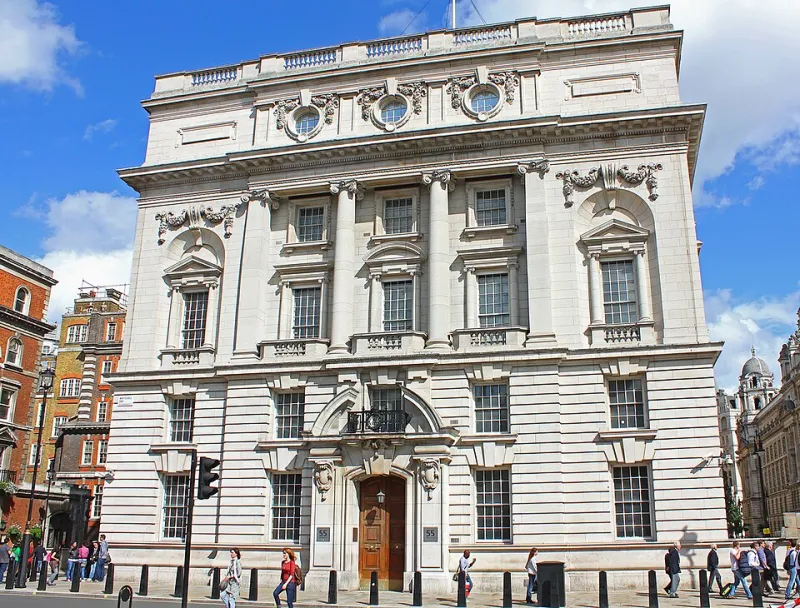
Photo: Wayland Smith, CC BY-SA 2.0, via Wikimedia Commons
Ask a simple question about a failing public service in 2026 and the answer often arrives in the passive voice. A trust is reviewing its estate. A regulator is considering its position. A board has commissioned an independent report. A commissioner has written to a sponsor department. Somewhere in that chain is a minister, a permanent secretary and a framework document, but the public is invited to look at a body with a name, a logo and no obvious owner.
This is not a scandal. It is a climate. The arm’s-length body — the quango, the trust, the regulator, the commissioner, the board — has become Britain’s default governing style. The assumption to unpick is that this is merely administrative convenience. In practice, it is a constitutional arrangement with a distinctive political effect: it allows power to be exercised while ownership of it is kept at a distance.
The Architecture of Distance
Arm’s-length government is not one thing. It covers regulators with statutory duties, NHS trusts and integrated care boards, housing and regeneration bodies, environmental agencies, cultural institutions, inspection regimes and a long tail of commissioners and panels. Some are national, some regional, some local in effect. Some are staffed by civil servants, some by appointees, some by a mixture. The variety is part of the problem: because the bodies differ, the accountability gap is easy to treat as a series of technical questions rather than a single political one.
The common thread is distance. A department sets a framework; a body operates within it; a minister retains a power of direction that is rarely used and often deliberately vague. Parliament can question the minister. Select committees can summon the chair. The National Audit Office can examine the books. Freedom of information can prise open the correspondence. All of this is oversight. None of it is ownership.
Oversight asks whether a decision was properly made. Ownership asks who answers for it. In a democracy, that second question is supposed to have an address. The arm’s-length state is designed to make the address harder to find.
The Sponsorship Illusion
The word ‘sponsor’ is revealing. A sponsor department sounds parental, even protective. In practice, sponsorship is a relationship of formal closeness and practical distance: the department funds, sets priorities and appoints some board members, but insists that day-to-day decisions are for the body itself. When something goes wrong, the minister says the body is independent. The body says it operates within its remit. The department says it is monitoring the position. Each statement can be true, and together they can leave the public with nobody to blame and nobody to remove.
Public appointments compound the effect. Board members are appointed, not elected. Many are capable and public-spirited. But their legitimacy is derivative: they are there because a process put them there, not because a constituency sent them. That is sometimes appropriate. Technical regulation, for instance, may need insulation from the electoral cycle. The difficulty is that the arm’s-length model has spread far beyond the genuinely technical into areas where contested values, scarce resources and local consent are at stake.
Housing, for example, is not a technical question. Nor is the shape of a hospital estate, the pace of environmental enforcement or the closure of a local service. These are political decisions in the proper sense: they involve trade-offs that citizens have a right to contest. When they are made by a body at one remove, the contest is redirected into consultation exercises, freedom of information requests and complaints procedures. These are not substitutes for a decision-maker who can be held to account.
The Unelected Estate
The cumulative result is an unelected estate: a layer of public power that is neither civil service nor local government nor private enterprise. It is not a conspiracy. Much of it exists for understandable reasons — to protect expertise, to prevent ministerial meddling, to allow long-term planning, to bring specialist skills into public administration. The contrarian point is not that every quango is a failure. It is that the model has become so habitual that its political costs are no longer seriously weighed.
The cost is not mainly financial, though the money matters. It is democratic. Power without an owner produces a particular kind of public cynicism. Citizens are asked to participate in consultations, respond to strategies and attend meetings, but the final decision often rests with a board they did not choose and cannot dismiss. The language of partnership and co-production sits awkwardly beside a structure in which the decisive room is still occupied by appointees.
The ‘quango weather’ shapes everything from hospital reconfiguration to housing targets, from inspection regimes to local transport. It is the climate in which ministers govern, local authorities negotiate and public services operate. Because it is a climate, it is rarely debated as a single subject. Each body has its own sponsor, its own framework, its own board and its own failure mode. The result is a system that is easy to defend in parts and difficult to hold together in principle.
The Reform Trap
When failure becomes too visible, the instinct is to reorganise. Bodies are merged, split, renamed or brought back into a department. A new framework document is published. A new chair is appointed. A new assurance process is announced. These changes can look decisive, but they often leave the underlying question untouched: who owns the decision?
Reorganisation is attractive because it is visible and because it avoids the harder constitutional argument about where accountability should sit. If a service is failing, the answer is not automatically to create a new body or abolish an old one. The answer is to decide which decisions require elected ownership and which genuinely require insulation — and then to make that choice explicit. A regulator deciding a technical safety standard is different from a board deciding whether a hospital closes. Both may need independence from daily politics; neither should be allowed to become a place where responsibility goes to die.
The machinery of government can be changed by statement. The culture of distance is harder to shift. It is sustained by habits: the minister who prefers not to know, the civil servant who prefers not to own, the board that prefers to speak of its remit, the public that has learned to expect no clear answer. These habits are not inevitable. They are choices dressed as procedure.
An Address for Power
Democratic accountability does not require that every technical decision be taken by a politician. It does require that when power is exercised, the public can identify who holds it, who set the terms and who can be removed if the terms are broken. The arm’s-length state often fails that test — not because its members are bad, but because its architecture is designed to blur the answer.
Britain does not need another round of quango-bashing. It needs a clearer constitutional map: which bodies exercise public power, on whose authority, under what direction, and with what consequence when they fail. Without that map, the borrowed seal of public authority will continue to be passed from hand to hand. The weather will remain the same, and the question of who owns the government will keep disappearing into the next framework document.