The Clock Without a Strike: Britain’s Renewal Ritual and the Permanent Exception
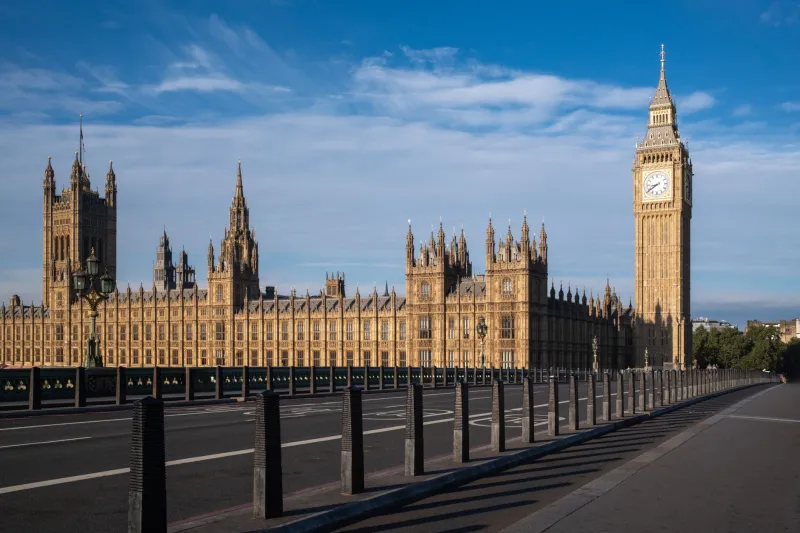
Britain has developed a quiet constitutional habit: it legislates for the exceptional, then renews the exception until it becomes ordinary. The sunset clause, once a guarantee that power would lapse, now functions as a calendar entry. The renewal order, once a checkpoint, has become a formality. The result is not a coup but a drift — a country that governs through expiry dates it has no intention of honouring.
The Renewal Vote as Ritual
Consider the anatomy of a renewal debate. A minister opens with a statement of continuing necessity. The opposition probes, but the whips are on. The vote is taken, often late, often on a block motion covering several powers at once. The statutory instrument is approved. The scrutiny that precedes it is thinner than for permanent legislation: fewer witnesses, less time, a committee whose remit is technical rather than constitutional. The temporary power is renewed not because Parliament has judged it necessary in detail but because the alternative — lapse — would require a decision about what comes next.
That is the first slippage. A sunset clause is meant to force a choice. In practice it forces a vote. The vote is not the same thing. A choice requires comparison of alternatives, an assessment of evidence, and a willingness to accept the consequence of lapse. A renewal vote requires only a majority. When renewal becomes routine, the exceptional loses its meaning. The temporary becomes the default grammar of governance.
The Parallel Statute Book
Temporary powers live in a parallel statute book: public health regulations, counter-terrorism provisions, emergency economic powers, and the growing family of pilot schemes that never quite end. Each instrument has its own renewal date, its own procedure, its own scrutiny gap. Few parliamentarians can see the whole. The government, by contrast, can see the whole, and can bundle renewals to suit its timetable. The emergency register is attractive precisely because it is less visible than the ordinary register.
This is not a matter of bad faith in every case. Some powers genuinely need to be flexible. Some emergencies are real. But the architecture matters. A power that is renewed in a block motion, scrutinised by a committee with a narrow remit, and debated late at night is not being held to account in any meaningful sense. It is being processed. The distinction between temporary and permanent is not preserved by the existence of a sunset clause. It is preserved by the willingness to let the sun set.
Why the Political Class Prefers the Emergency Register
Permanent statute invites permanent argument. It is amendable, debatable, and difficult to reverse. Temporary powers invite less: a shorter debate, a narrower scrutiny, a lower political cost. Ministers can say they are acting urgently; they can promise review; they can defer the difficult trade-off. The opposition can oppose the renewal without opposing the underlying aim. The civil service can plan on continuity without a full legislative programme. The emergency register is a device for managing political risk, not just public risk.
There is also a presentational advantage. A temporary power allows a government to claim both action and restraint. It is acting, but only temporarily. It is taking powers, but giving them back. The renewal date is a hedge against criticism. Yet a hedge that is never called in becomes a permanent position. The political class has learned that the emergency register is more comfortable than the ordinary one. That is a problem for scrutiny, because comfort is the enemy of accountability.
The Scrutiny Deficit
Scrutiny of temporary measures is not merely thinner; it is structurally handicapped. The Commons delegated legislation committees examine instruments against narrow criteria. They do not ask whether the power should exist. The Lords Secondary Legislation Scrutiny Committee can draw attention to defects, but it cannot force a debate on the principle. The renewal motion is often unamendable, or amendable only in ways that do not bind. And because the power is temporary, its defenders can argue that scrutiny is less urgent — it will expire, after all. That argument is sound only if expiry is real.
When expiry is not real, the scrutiny deficit compounds. Each renewal is treated as a technical extension rather than a constitutional moment. The cumulative effect is a body of standing authority that has never been tested as standing authority. Parliament has voted for it many times, but never on the question of whether it should be permanent. That is a curious kind of accountability: repeated without being resolved.
The Disappearing Deadline
A deadline that is always extended is not a deadline. It is a licence. The sunset clause was designed to force a decision; in practice it forces a vote. When renewal becomes routine, the exceptional loses its meaning. The temporary becomes the default grammar of governance. Britain has not abolished the distinction between the exceptional and the normal by decree. It has abolished it by habit.
Restoring Expiry
Restoring the distinction does not require a constitutional revolution. It requires small, stubborn reforms. Each temporary power should be renewed individually, not in blocks. Renewal should follow a debate on a substantive motion, not a negative resolution. A public register of temporary powers should be published and updated. Committees should be able to recommend lapse, not merely note concern. And the default should be lapse, not renewal. A serious legislature would treat expiry as a constitutional moment, not a housekeeping item.
The Permanent Emergency
The deeper problem is political, not procedural. A country that governs by expiry date it never intends to honour has quietly abolished the distinction between the exceptional and the normal. It has trained itself to accept emergency as a permanent register. That is not a recipe for tyranny in the crude sense; it is something subtler — a habit of deferring decision, of lowering the cost of authority, of letting the clock run. The sunset that never sets is not a failure of drafting. It is a failure of will.