The Franchise Model: How Britain’s Parties Traded Members for Metrics

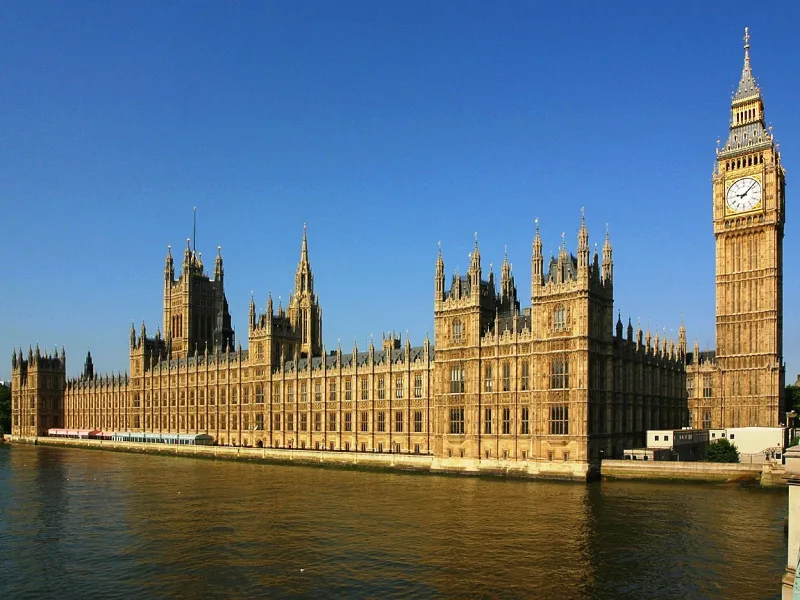
Photo: Acabashi, CC BY-SA 4.0, via Wikimedia Commons
The branch meeting is now a curiosity. In many constituencies, the local party survives as a WhatsApp group, a treasurer’s spreadsheet and a handful of names on a mailing list. The room above the pub, the church hall with its stack of folding chairs, the monthly argument over minutes and the annual dinner: these are remembered as folklore rather than experienced as politics. Britain’s parties did not suddenly stop having members. They slowly stopped needing them.
The Branch as Relic
For much of the twentieth century, mass-membership parties were embedded in civic life. Local associations selected candidates, raised funds, argued over policy and provided the social texture through which national politics reached the doorstep. That world has been eroding for decades. Membership figures are patchy and self-reported, but the direction of travel is not seriously disputed: the large cohorts of the post-war period have given way to smaller, older and more passive memberships. Meanwhile, the parties have built centralised campaign machines, professional communications teams and databases that allow a national headquarters to speak directly to voters in a target seat without the intermediation of a local branch.
This is often described as a response to declining participation. The contrarian reading is that it is also a cause. A party that does not need members in order to function will not prioritise the awkward, time-consuming business of keeping them. The branch becomes a legacy system: maintained for compliance and occasional canvassing, but not treated as a source of political authority.
Supporters, Not Members
The vocabulary has shifted accordingly. Parties now cultivate ‘supporters’, ‘registered sympathisers’ and ‘volunteers’ — categories that imply warmth but not rights. A member, in the traditional sense, holds a stake: the ability to vote in selections, to table motions, to demand explanations. A supporter holds a preference. The difference matters. The first is a form of accountability; the second is a form of audience segmentation.
This is not a partisan observation. The Conservative Party, Labour and the Liberal Democrats have all travelled the same road at different speeds and with different internal controversies. The common feature is centralisation: national messaging tightens, local discretion narrows, and the candidate selection process becomes increasingly managed by regional and national bodies. The local association that once acted as a check on the leadership now often acts as a rubber stamp — or is bypassed altogether.
The Data Doorstep
Campaigning itself has changed. The doorstep was once a place of persuasion, however imperfect: a conversation, a leaflet, an argument that might move a voter or at least reveal the shape of local opinion. Today the doorstep is more often a data-collection point. The canvasser’s script is designed to fill fields in a national database, not to deliberate. Activists are told where to go by an algorithm that predicts likely support, and the information flows upward rather than outward.
This is efficient, and efficiency is not a sin. But it produces a strange loneliness. The volunteer who spends a wet Saturday knocking on doors is part of a national experiment in message-testing, not a local political community. The voter who opens the door meets a representative of a brand, not a neighbour with a stake in the same streets. The transaction is shallow on both sides, and it is not surprising that trust in politics has not risen as campaigning has become more sophisticated.
Accountability Without Members
A party without members is a party without an internal public. The leadership answers to donors, focus groups and the media cycle; it does not answer to a hall full of activists who can demand a vote. This has consequences for how policy is made. Decisions that would once have been argued over for months in local associations are now announced, tested and reframed by central teams. The result can be agile, but it is also unanchored. When the leadership changes its mind, there is no membership structure to absorb, interpret or resist the change.
It is fashionable to blame volatility on Brexit, populism or social media. Those are real forces, but they are not the whole story. An electorate that no longer encounters a durable local party — one with members, meetings and a visible presence between elections — has fewer reasons to attach itself to a political identity. Politics becomes something that happens on a screen, and screen-based politics is easy to switch off.
The Engagement Trap
The standard remedy is ‘better engagement’: more digital town halls, more supporter schemes, more consultation exercises. This is the trap. Engagement is something a brand does to a customer; membership is something a party shares with a citizen. The former can be managed by a communications department. The latter requires a distribution of power that centralised parties have spent thirty years avoiding.
If Britain wants a politics that is more accountable and less lonely, the question is not how to engage members but whether parties are willing to have them. A memberless party can win elections. It cannot easily be held to account by the people who once made it a living organisation. That is the quiet cost of the franchise model, and it is paid in the empty chairs of the branch meeting.
A Question of Ownership
The Unhived Mind has no brief for nostalgia. The old mass-membership parties were not always admirable, and their branch meetings could be petty and exclusionary. But they were owned by someone other than the leadership. The current model is owned by no one in particular, which is precisely why it feels both ubiquitous and weightless. Until parties are willing to give members real authority — over selections, over policy, over the survival of their own local associations — the drift towards brand politics will continue. And the doorstep will remain a data point, not a conversation.