The Soft-Launch State: Britain’s Government by Provisional Announcement
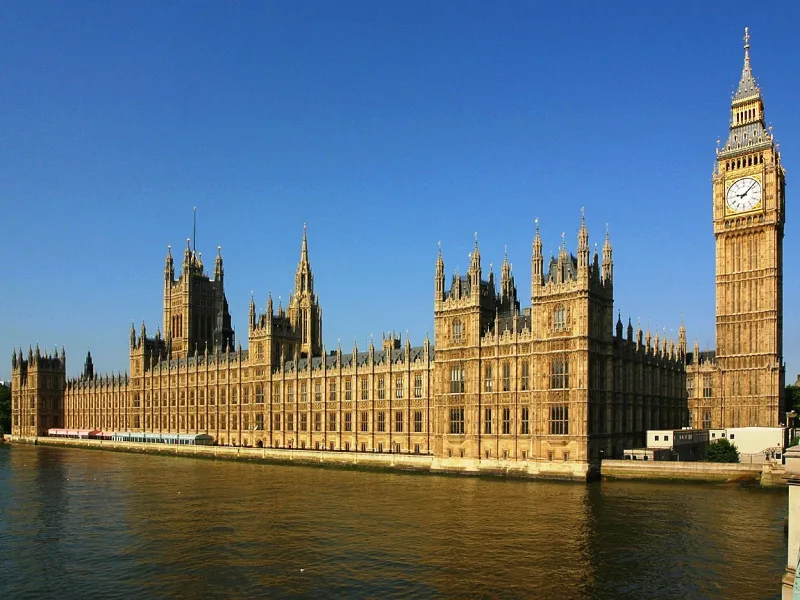
Photo: Westminster Palace empty press briefing room microphones and chairs, via vistapointe.net
The modern Westminster announcement rarely begins with a statement to the House. It begins with a headline. A measure is trailed in a Sunday paper, a minister is reported to be ‘minded’ to act, and a ‘source close to the process’ supplies just enough detail to be consequential and just enough ambiguity to be denied. By the time the formal statement arrives, the argument has already been staged, the reaction sampled and the lobby briefed. This is usually described as a malfunction of Westminster communications. It is better understood as a method of governing.
The Anatomy of the Pre-Announcement
Advance briefing takes several forms, and they should not be collapsed into one. There is the genuine leak: unauthorised, often embarrassing, occasionally public-spirited. There is the trial balloon: a policy floated to see whether it survives contact with the press and the public. And there is the sanctioned pre-announcement: a decision deliberately softened before it is formally made, so that the first version of the story belongs to the government’s chosen outlets rather than to Parliament or the Opposition.
The tell is not that a story appears. Governments have always talked to journalists. The tell is the precision of the ambiguity. A briefed measure will often be specific enough to dominate the news cycle but vague enough to be disowned if the reaction turns ugly. ‘Considering’, ‘looking at’ and ‘understood to be sympathetic’ are not accidents of language. They are instruments of plausible deniability.
By 2026 this habit is mature. It runs through fiscal events, departmental reviews, immigration policy, energy support and the perennial rehearsal of U-turns. The pre-briefing is not a leak from the decision-making process; it is often a stage of it.
Parliament as Ratifier
The constitutional cost is not that MPs are kept in the dark. It is that they are invited into the light too late. When a chancellor or a secretary of state rises to speak, the central fact has frequently been public for days. The House is no longer the first audience for the decision. It is the place where the decision is formally acknowledged, defended and voted upon.
This changes the texture of scrutiny. A select committee can examine a proposal once it exists, but it struggles to examine a proposal that has already been launched, tested and embedded in expectation. Urgent questions can be asked, but urgency is difficult to manufacture when the story is already several news cycles old. Opposition motions can be tabled, but they are responding to a fait accompli rather than shaping a choice.
There are legitimate reasons for some pre-briefing. Markets can be sensitive. Departments need time to prepare. A government may want to avoid a sudden shock to services or spending. But legitimacy of motive is not the same as adequacy of process. The cumulative effect is a Parliament that ratifies more than it decides, and an accountability that attaches to the presentation of policy rather than to its formation.
The Trial Balloon and the Manufactured Reaction
The trial balloon is the most revealing device. A policy is floated, reaction is measured, and the government either proceeds, adjusts or denies. In theory this is a form of listening. In practice it can be a form of reaction management: the public is invited to respond to a proposal that has not been formally made, by a government that retains the option of saying it was never quite a proposal at all.
This is not consultation in any meaningful sense. Consultation implies a question, a process and a record. The trial balloon implies a mood, a focus group and a press officer. It narrows the distance between listening and manipulating until the two become hard to distinguish. The public is given the sensation of influence without the structure of consent.
It also rewards the loudest and most organised reactions. A briefing that is tested in the press is tested among those who read, react and lobby first. The quieter constituencies — the ones without press officers, trade associations or active social media accounts — are heard later, if at all.
A Shadow Commons
Around this practice has grown a shadow parliament of advisers, journalists, lobbyists and anonymous accounts. It does not sit in the Palace of Westminster, but it performs some of the same functions: it aggregates pressure, signals intentions and negotiates the terms on which policy will be received. The difference is that its proceedings are not recorded, its participants are not accountable to voters and its proceedings cannot be amended.
This is not a conspiracy. It is an incentive structure. Ministers want favourable framing. Advisers want control of the story. Journalists want access. Outlets want traffic. The result is a system in which the pre-announcement becomes rational for almost everyone involved, even when it weakens the institution that is supposed to hold the whole enterprise to account.
The risk is not simply secrecy. It is a two-tier transparency. The public receives the headline; the invited receive the reasoning. The Commons receives the statement; the lobby receives the briefing. Accountability becomes a question of who was told first, and on what terms, rather than whether the decision itself can be challenged before it hardens.
What Accountability Means Now
If a minister denies a story that later becomes policy, is that a lie, a test or a negotiation? If a department briefs a measure as ‘under consideration’ and then announces it as settled, has the public been consulted or merely warmed up? These are not abstract questions. They go to the convention of ministerial responsibility, which depends on a clear sequence: proposal, scrutiny, decision, defence.
Advance briefing scrambles that sequence. It makes scrutiny retrospective and defence pre-emptive. It allows a government to claim it listened when it was sampling, and to claim it decided when it had already launched. Parliament can still vote. It cannot easily recover the moment before the launch.
The remedy is not a ban on briefing. Governments will always talk, and a free press will always report. But clearer conventions are possible: greater on-record attribution for significant policy, a published record of pre-announcements, and a stronger expectation that major measures are stated to the House before they are staged for the public. None of this would end the practice. It would at least make the practice visible.
Until then, the leak is the law. The soft-launch state is not a failure of British government; it is one of its operating systems. The question for 2026 is whether Britain wants government by announcement or government by argument. The difference is not merely procedural. It is the difference between being governed and being prepared for a decision that has already been taken.