The Swarm Behind the Screen: Britain’s Fragmented Political Conversation

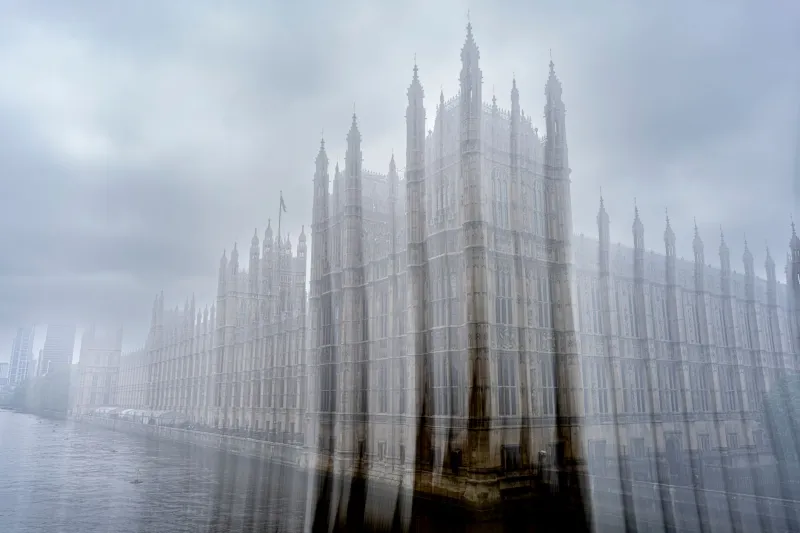
Photo by Photo by The Ridge Ohio on Unsplash on Unsplash
Westminster still speaks as if Britain has one political conversation. Ministers, commentators and campaign strategists refer to the national mood, the public, the debate, as though these were singular objects that can be measured and addressed. In 2026, the reality is a series of overlapping swarms: subreddits and WhatsApp groups, YouTube factions and podcast tribes, local Facebook pages and Discord servers, each with its own vocabulary, heroes, villains and sense of what counts as evidence. The interesting story is not that people disagree. It is that they increasingly disagree about what the argument is about, who is entitled to speak, and which facts are admissible.
The myth of one national conversation
Question Time, the Today programme and the evening news still assume a national hearth. Their format implies that the country gathers around a common set of questions and listens to a common set of answers. But audiences no longer arrive through the same door. They arrive through algorithmic feeds, group chats and niche creators who frame the news before broadcasters have had time to schedule a panel. The shared text is thinner than it appears. A clip that dominates one feed may be entirely absent from another, not because of censorship but because the architecture of attention has changed.
This is not simply a matter of younger audiences abandoning linear media. The fragmentation runs across generations. A WhatsApp group of relatives can contain several incompatible political realities. A local Facebook page can become a parallel parish council, complete with its own folklore and feuds. A YouTube channel can sustain a faction that feels more real to its members than any Westminster debate.
Swarms, not tribes
Tribes imply stable membership and inherited loyalty. Swarms are looser, faster and more reactive. They form around grievances, personalities and stories, then disperse or mutate when the emotional charge fades. A subreddit can turn on a politician in a afternoon. A podcast tribe can adopt a policy position because a trusted host mentioned it. A WhatsApp group can amplify a local rumour into a national grievance before any newspaper has verified the first sentence.
Britain has long had political subcultures, but the swarm is different in speed and reach. It can mobilise quickly, police its boundaries through ridicule rather than membership cards, and produce a sense of intimacy that broadcast politics cannot match. The boundaries are porous, but the norms are distinct. What counts as a good argument in one swarm is often treated as bad faith in another.
Polarisation is the wrong diagnosis
Simple polarisation suggests two poles moving apart. That metaphor is too tidy. The more accurate description is fragmentation combined with asymmetric epistemology: people do not merely hold different opinions; they inhabit different information ecosystems with different standards of proof. Westminster’s language of left and right misses much of this. Some of the sharpest online disputes are not between Labour and Conservative voters but within audiences that share a broad outlook yet disagree about tactics, tone, leadership or which institutions can be trusted.
When shared territory collapses, no common jury remains to settle disputes. A claim can be common sense in one swarm and obviously false in another. The result is not silence but noise. Political parties adapt by speaking to swarms rather than publics, targeting audiences with tailored messages and treating consistency as a constraint rather than a virtue.
Why this feels more unhived in 2026
Several forces have converged. Platform algorithms reward engagement over understanding. Local newspapers have weakened, leaving gaps that national and hyper-partisan voices fill. Constitutional arguments since 2016 have left a residue of distrust that attaches to almost every institution. AI-generated content makes the verification problem harder. And the cost-of-living pressures of recent years have made abstract Westminster debates feel remote from daily life.
Yet the collapse of shared territory is not only a technology story. It is also a story about institutional distance. When politics feels like something done to people rather than by them, the swarm becomes an attractive place to belong. It offers recognition, explanation and a sense of agency, even when that agency is largely expressive.
A civic discipline for independent readers
The answer is not nostalgia for a broadcast unity that never fully existed. Nor is it to create one swarm to rule them all. The useful response is a civic discipline: read across swarms, check primary sources, distinguish assertion from evidence, and support local journalism that still attempts verification. Join offline forums where disagreement is unavoidable. Put questions to MPs in writing and publish the answers. Host conversations with rules that protect disagreement rather than suppress it.
At The Unhived Mind, the wager is that independent-minded readers can tolerate complexity without retreating into a comfortable faction. A democracy does not need a single conversation, but it does need common ground on which disagreement can be productive. In 2026, the swarm behind the screen is not going away. The question is whether citizens can learn to move between swarms without losing the capacity to speak to one another.